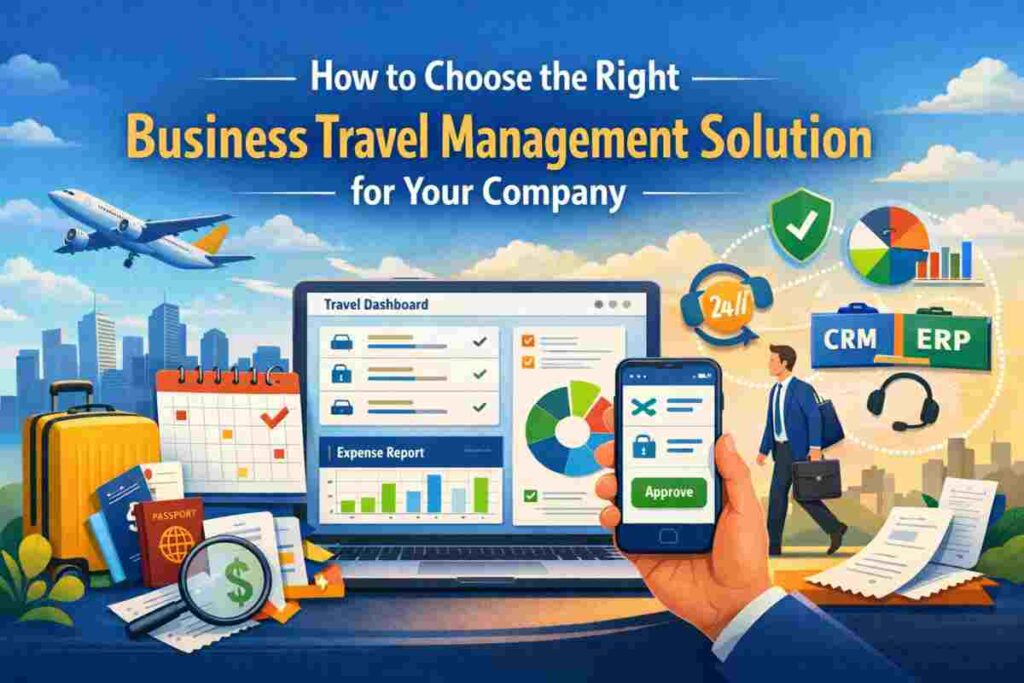
It usually starts the same way. A flight booked too late. A hotel that blows the budget. Receipts scattered across emails, WhatsApp, and someone’s camera roll. Your team spends more time managing the trip than actually preparing for it.
Multiply that across a growing company, and things get messy fast.
Business travel should feel smooth. Instead, it often turns into a patchwork of last-minute bookings, unclear approvals, and costs that quietly stack up. No single view. No real control. Just friction.
That’s where the right business travel management solution changes the game.
With everything in one place bookings, expenses, policies you move from chaos to clarity. Trips get booked faster. Spending stays within limits. Your team stops chasing approvals and starts focusing on work that matters.
In this guide, you’ll learn how to choose a solution that actually fits your company. Not just what looks good on paper, but what works day-to-day. We’ll walk through what to look for, what to avoid, and how to make a decision you won’t regret six months down the line.
Why Your Company Needs a Business Travel Management Solution
Let’s be honest most companies don’t realize how messy their travel process is until it starts slowing everything down.
Common Problems with Manual Travel Handling
Without a proper system, travel turns into a juggling act.
Bookings happen across different platforms. One person uses a booking site, another calls an agent, someone else just picks the cheapest option they can find, often without understanding what is a direct booking or when it can offer better rates, flexibility, or support. There’s no consistency. No clear record.
Approvals? Scattered across emails and chat threads. Easy to miss. Even easier to delay.
Then come expenses. Receipts get lost. Reports pile up. Finance teams spend hours trying to match numbers that should have been tracked automatically.
It’s not just inefficient it’s exhausting.
Impact on Time, Cost, and Employee Experience
Time is the first thing to go.
Your team wastes hours comparing options, waiting for approvals, fixing booking mistakes. That’s time they could spend on actual work.
Costs creep up next.
Without clear policies or visibility, people overspend without meaning to. Last-minute bookings. Price differences across platforms. No real control over where the money goes.
And then there’s the human side.
Employees get frustrated. Travel feels like a chore instead of a smooth process. Confusion, delays, and poor coordination take the edge off trips that are meant to drive results.
What Changes When a Proper System Is in Place
Everything tightens up.
Bookings happen in one place. Flights, hotels, transport all organized and easy to access. No guesswork.
Policies are built into the system, so employees stay within limits without needing constant reminders.
Expenses are tracked automatically. No more chasing receipts. No more messy reports at the end of the month.
Managers get visibility. Finance gets clean data. Employees get a smoother experience.
And most importantly your company gets control back.
Travel stops being a problem to manage and becomes a process that just works.
Must-Have Features in a Travel Management Solution
Once you know what your company needs, the next step is simple make sure the tool can actually deliver.
Not every platform is built the same. Some look good on the surface but fall apart in daily use. The right one should make travel feel smooth, not add another layer of work.
Here’s what to look for.
Centralized Booking System
This is the backbone.
Flights, hotels, and transport should all sit in one place. No switching between tabs. No jumping across different sites.
Your team should be able to search, compare, and book everything from a single dashboard. It keeps things organized and cuts down the time spent planning trips.
More importantly, it gives your company a clear view of every booking.
Expense Tracking and Reporting
Manual expense handling is where things usually break.
A good system captures expenses automatically. Book a flight, reserve a hotel the cost is already logged. No need to collect receipts later or fill out long reports.
Real-time tracking means you always know what’s being spent. No surprises at the end of the month. No scrambling to fix missing data.
Finance teams get clean records. Employees spend less time on admin.
Policy Control and Compliance
Travel policies only work if people follow them and that’s hard without the right setup.
A solid platform builds your rules directly into the booking process. Spending limits, preferred vendors, approval flows all handled in the background.
Instead of chasing people to stay within limits, the system guides them there from the start.
It keeps things consistent without slowing anyone down.
Mobile Access and Ease of Use
Travel doesn’t happen at a desk.
Your team needs to book, update, or check trips while moving. A mobile-friendly platform makes that possible.
But access alone isn’t enough. It has to be easy to use.
Clean layout. Simple steps. No learning curve. If it feels complicated, people won’t use it and then the whole system falls apart.
Integrations with Existing Tools
Your travel tool shouldn’t work in isolation.
It should connect with the systems you already use CRM, ERP, HR platforms. That way, data flows smoothly without manual entry. It should connect with the systems you already use CRM, ERP, HR platforms. That way, data flows smoothly without manual entry through properly integrated CRM development services and connected business systems.
Employee details, budgets, approvals all synced. No duplication. No confusion.
It turns separate tools into one connected setup.
Reporting and Analytics
If you can’t see the data, you can’t control it.
A strong system gives you clear reports where money is going, how often people travel, and where costs are creeping up.
You can spot patterns. Catch waste early. Make better decisions over time.
It’s not about more data. It’s about useful data.
Customer Support Availability
Things don’t always go as planned.
Flights get delayed. Bookings need changes. Plans shift at the last minute.
When that happens, your team needs help fast.
Round-the-clock support makes a real difference, especially for international travel. It means someone is always there to fix issues before they turn into bigger problems.
And for your employees, that peace of mind matters more than any feature list.
Popular Business Travel Management Solutions to Consider
Once you know what features matter, the next step is seeing how real platforms stack up. Not all tools are built for the same type of company some focus on speed and ease, others on control and scale.
Here are four widely used options, each with a different strength.
Navan
If you want everything in one place, Navan is hard to ignore.
It combines booking, expenses, and payments into a single system. That means your team can book trips while the system quietly tracks spending in the background.
What stands out is how it suggests options based on past behavior and company rules. It’s not just booking it’s guided booking.
And because expenses sync automatically, there’s no cleanup later.
TravelPerk
TravelPerk leans toward flexibility.
Plans change this tool is built for that reality. Easy cancellations, simple changes, and fewer penalties when schedules shift.
It’s also known for being easy to use, which matters more than people think. If your team actually enjoys using the tool, adoption becomes a lot smoother.
SAP Concur
This one is built for scale.
SAP Concur handles complex travel programs across large organizations. Strong policy controls, detailed reporting, and global coverage make it a solid choice for companies with heavy travel needs.
It’s not the simplest tool but it gives you deep control, especially when compliance really matters.
Rippling
Rippling takes a different approach.
Instead of being just a travel tool, it connects travel with HR and finance. Employee data, budgets, and approvals all sit in the same system.
That makes it a strong fit for smaller teams that want fewer tools, not more. Everything stays connected, which cuts down manual work and keeps things simple.
Each of these tools solves the same problem but in a different way.
The right choice depends on your company’s size, travel habits, and how much control you need.
How to Evaluate and Compare Your Options
At this stage, most companies make one mistake they choose based on what looks good, not what actually works.
A polished demo page or a long feature list doesn’t tell you how the tool will perform when your team starts using it daily. You need to dig a little deeper.
Request Demos
Don’t settle for a generic walkthrough.
Ask for a demo that mirrors your real workflow. Book an actual trip. Run it through your approval process. Try changing dates, canceling, or adding expenses.
This is where gaps show up.
Does it feel smooth or clunky? Are steps clear or confusing? If your team struggles during the demo, they’ll struggle even more later.
Read User Reviews
What companies say about themselves is one thing. What users say is another.
Check platforms like G2 to see real feedback. Look for patterns, not just ratings.
Are people complaining about slow support? Bugs? Complicated setup?
Or are they praising ease of use and time saved?
You’re not looking for perfection you’re looking for honesty.
Check Integration Capabilities
Even the best project management tools become a problem if it doesn’t fit your setup.
Make sure it connects with the systems you already use CRM, ERP, HR tools, especially if you plan to hire dedicated software developers for custom integrations and workflow automation. Employee data, budgets, approvals should move smoothly between platforms.
If you have to enter the same data twice, something’s wrong.
A good solution should reduce work, not create more of it.
Compare ROI
Price alone doesn’t tell the full story.
A cheaper tool that wastes time or allows overspending can cost more in the long run. On the other hand, a slightly higher upfront cost might save you money through better control and efficiency.
Look at the bigger picture.
How much time will your team save? How much unnecessary spend can you cut? How quickly can the system pay for itself?
That’s the real comparison not just the monthly fee.
Security, Compliance, and Pricing
This is the part many teams rush through and regret later.
A travel management solution doesn’t just handle bookings. It holds employee data, payment details, travel plans. If something goes wrong here, it’s not a small issue.
So before you commit, look closely at how the platform handles security, rules, and cost.
Data Protection
Your company’s travel data needs to stay protected at all times.
That means strong encryption, secure logins, and systems built to prevent unauthorized access. You shouldn’t have to wonder where your data is stored or who can see it.
Check how the platform handles sensitive information like payment details and personal data. If the answers feel vague, that’s a red flag. To ensure compliance and transparency, gdpr software helps monitor data handling practices, enforce privacy regulations, and give you better control over how sensitive information is stored and accessed.
Security shouldn’t be an add-on it should be built into the foundation.
Legal and Policy Compliance
Travel doesn’t stop at borders, and neither do regulations.
If your team travels internationally, your system needs to handle different rules across regions data protection laws, tax requirements, and internal company policies.
It should also support duty of care. That means knowing where your employees are and being able to respond quickly if something changes during a trip.
A good platform keeps you aligned with both external laws and your own company rules without extra effort.
Pricing Structure
Pricing can look simple at first glance but it rarely is.
Some tools offer subscription-based plans, usually charged per user or per month. Others use custom pricing based on company size and travel volume.
The key is understanding what’s included.
Are there setup fees? Charges for integrations? Extra costs for support or upgrades?
What looks affordable upfront can become expensive once those extras add up.
Take the time to break it down. Clear pricing now saves headaches later.
Tips for a Smooth Implementation
Choosing the right tool is only half the job. What really matters is how well your team adopts it.
A great system used poorly still creates problems. A simple system used well can transform how your company handles travel.
Here’s how to get it right from the start.
Train Your Team
Don’t assume people will “figure it out.”
Even the easiest platform needs a proper introduction. Walk your team through how to book trips, submit expenses, and follow company rules inside the system.
Keep it simple. Short sessions. Clear examples. Real scenarios.
The goal isn’t to teach every feature it’s to make people comfortable using it from day one.
Because if they hesitate, they’ll fall back to old habits.
Use One Platform Only
This is where many companies slip.
They introduce a new system but still allow bookings through emails, external sites, or agents. The result? Scattered data and zero control.
Set a clear rule everything goes through one platform.
It keeps bookings consistent, expenses accurate, and reporting clean. No gaps. No confusion.
One system. One source of truth.
Track Usage and Improve
Implementation doesn’t end after launch.
Watch how your team is using the platform. Are they booking through it consistently? Are there steps causing delays or confusion?
Use that feedback.
Adjust policies where needed. Simplify workflows. Fix what’s slowing people down.
Over time, the system should feel less like a tool and more like a natural part of how your company operates.
That’s when you know it’s working.
Common Mistakes to Avoid
Even with the right intentions, it’s easy to make the wrong call here. And once a system is in place, fixing it later can be costly and frustrating.
Here are the mistakes that trip most teams up.
Choosing Based on Price Alone
A lower price tag can be tempting.
But a cheaper tool that slows your team down or misses key features will cost more over time. Lost hours, messy data, and poor control add up quickly.
Look beyond the monthly fee. Think about what you’re getting and what you’re not.
Ignoring User Experience
If the system feels hard to use, people won’t use it. It’s that simple.
Clunky navigation, too many steps, confusing layouts these push employees back to old habits like booking outside the system.
And once that happens, you lose visibility and control again.
Ease of use isn’t a bonus. It’s essential.
Skipping Trial or Demo
Choosing a tool without testing it is a gamble.
What looks good in a brochure can feel completely different in real use. Small frustrations during booking or approvals can turn into daily headaches.
A trial or demo shows you the truth.
Always test before you commit.
Overcomplicating the Setup
More features don’t always mean better results.
Trying to set up every rule, workflow, and option from day one can overwhelm your team. Instead of helping, it slows everything down.
Start simple. Get the basics right. Then build from there.
Final Thoughts
The right travel management solution doesn’t just organize trips it changes how your company operates.
It saves time. It keeps spending in check. It gives you a clear view of what’s happening across your team.
But the key is this: start with your needs, not the tool.
Understand how your company travels, where the problems are, and what you want to fix. Then choose a system that fits that reality.
And before you make the final call test it.
Because the best decision isn’t the one that looks good on paper. It’s the one that works smoothly when your team actually uses it.
Read Also: A Weekend in Liverpool: A Friendly Guide to One of the UK’s Most Vibrant Cities