A logistics yard operates like a busy roundabout. When too many trucks pile up at the gates, the entire supply chain slows down. Yard congestion does not just waste fuel; it creates missed departure windows and frustrated drivers. Many logistics teams struggle to see where each trailer and container sits at any given moment. This lack of real-time visibility leads to bottlenecks that cost money and damage customer trust. For businesses that sell products online, even small logistics delays can create late shipments, support tickets, and repeat customer complaints. Radio frequency identification, or RFID, offers a practical answer to this messy problem without requiring a full yard rebuild.
A Clear View of Every Asset
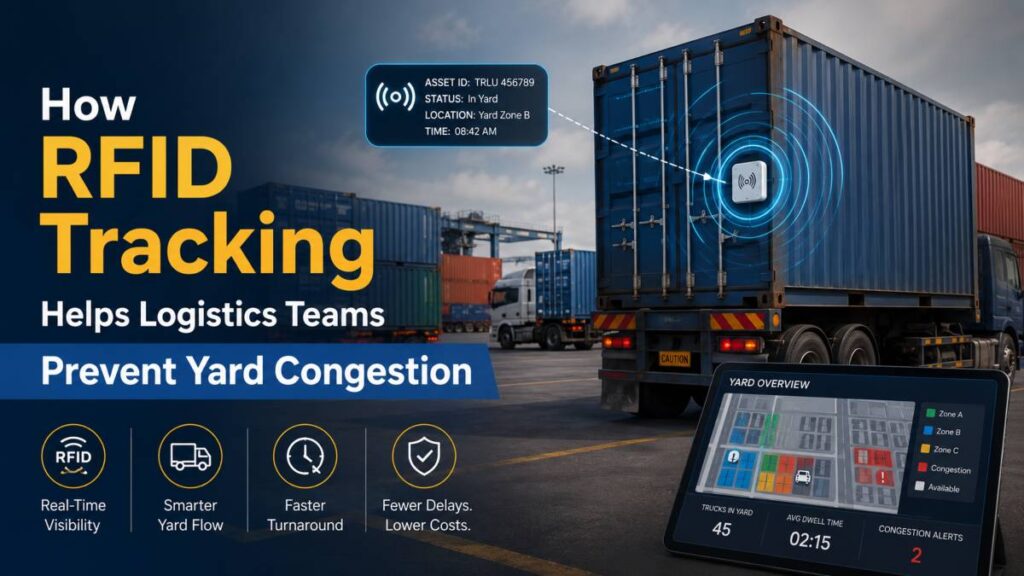
RFID uses small tags attached to trailers, containers, and forklifts. These tags send a unique signal to readers placed at gate entrances, dock doors, and parking rows. The yard manager gets a live map of every asset using an rfid tracking software without walking the lot or making radio calls. This constant flow of data shows exactly how many trucks wait for a door and for how long. With this information, teams reroute incoming drivers to open spots before gridlock forms.
Direct Action Against Bottlenecks
Instead of guessing why a line of trucks forms at 2 p.m., a logistics team checks the RFID dashboard. The system might reveal that one dock door takes twice as long as the others. Or the data could show that empty trailers block access to high-use loading zones. Yard supervisors then reassign doors, move idle equipment, or adjust shift schedules based on facts. These small changes, repeated daily, cut wait times and keep traffic flowing toward the exit.
Lower Fuel Use and Fewer Delays
A truck idling in a congested yard burns diesel while producing no value. For a fleet with fifty arrivals per day, those idling minutes add up to serious expense. RFID tracking reduces engine idle time because drivers pull directly to an assigned spot. The approach also lowers the risk of late departures that trigger customer penalties. When each trailer moves without unnecessary stops, the whole operation runs leaner and cleaner without disruptions to supply chains.
Better Coordination Between Teams
Yard congestion often grows from poor communication between the gate guard, the dock supervisor, and the dispatcher. RFID removes the need for phone tag or whiteboard notes. The moment a truck passes the entrance reader, every relevant person sees its location on a shared screen. The dock team prepares the right freight while the yard driver positions a trailer for quick hookup. This shared awareness prevents the common problem of two teams waiting on each other in different corners of the lot.
Practical Steps to Get Started
A logistics team does not need to tag every asset on day one. The smarter method starts with a single zone, such as the inbound gate and the first row of parking slots. A pilot run over two weeks reveals the biggest choke points with very little investment. After this test, the team expands to cover dock doors and high-traffic lanes. Many yard management software providers offer RFID readers that plug into existing systems without major disruption.
Yard congestion drains time, fuel, and patience from logistics operations. An rfid tracking software gives teams the power to see problems as they start, not hours later. The technology turns a chaotic lot into a predictable sequence of arrivals, moves, and departures. From lower fuel bills to happier drivers, the benefits touch every part of the shift. Any logistics yard that handles more than twenty trucks per day should look at RFID tags and readers as a standard tool. The result is a smoother gate, a faster dock, and a team that leaves on time every time.