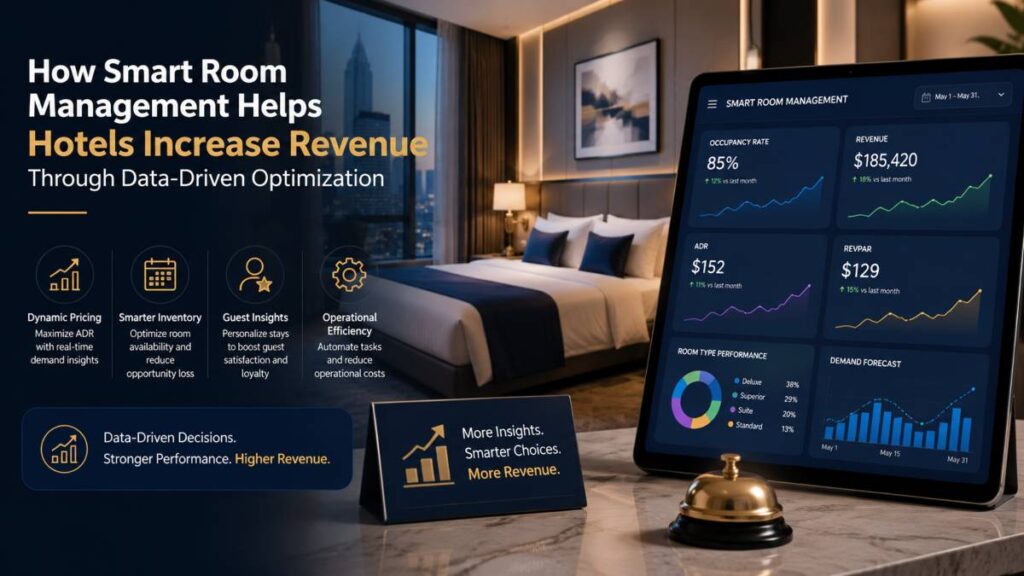
In the hotel market, every empty room means lost money. Smart room technology enables better control over guest services, pricing, energy use, and more. You don’t have to guess; you run the hotel based on real-time data, and your performance improves significantly. Smart hotel room management helps you do all of this by lowering costs through connected devices and data, raising prices, and improving the guest experience simultaneously. When guests can change lighting, temperature, and entertainment with their phone or tablet, you make them happier. Integrated systems also work with your property tools to adjust rates based on how many people are booking and how much demand there is. You also cut waste with automated energy controls and occupancy sensors. These tools reduce operating costs while supporting stronger revenue management strategies. When you align smart room technology with daily hotel operations, you create steady gains in both profitability and guest loyalty.
Core Revenue Drivers Enhanced by Smart Room Management
Smart hotel room management connects guest data, pricing tools, and automation to increase room revenue. You use real-time data to set better rates, drive upselling, and control how you sell rooms across channels.
Dynamic Pricing and Automated Rate Optimization
Smart room systems monitor how many people are in a room, how long they spend in the room, and what they do while they’re there. This data can be used in your revenue management system (RMS) to set more accurate dynamic prices. A cloud-based RMS analyzes incoming bookings, competitor prices, past demand, and events in the area. Then, in response to signals of demand, it adjusts the prices of the rooms automatically. It facilitates rate optimization without manual adjustments. Automation can reduce delays in pricing and mistakes by humans. When demand rises, its system raises prices across all its connected distribution channels. It reduces prices to maintain high occupancy when demand falls. Sophisticated platforms can combine group pricing and transient pricing at the same time. You can optimize for total revenue, rather than just the average daily rate. This approach strengthens your overall revenue management strategies and helps you adapt quickly to changing market conditions.
Personalized Offers and Guest Upselling
Smart room technology collects preference data such as room temperature, streaming habits, and service requests. The data can be used to drive targeted personalized promotions and upselling. If a certain guest regularly orders late checkout, for example, that offer can be presented by your system during online check-in. You can recommend spa or wellness packages if a guest streams fitness content. You can trigger offers at key moments: during booking through your booking engine, at pre-arrival via email or app, on-property through in-room tablets or mobile applications. Automation ensures these offers reach the right guest at the right time. That boosts conversion rates without weighing down your front desk team. Personalized upselling enhances guest satisfaction and increases revenue per stay. You move from generic add-ons to data-driven offers that reflect real behavior.
Integrated Revenue Management Systems. The smart room management systems are best integrated directly with the hotel revenue management system. Integration enables data to transfer over from operations to pricing tools. A cloud-based RMS can combine:
- Occupancy and usage data from smart rooms
- Booking trends from your PMS
- Market demand and competitor rate data
This single view enables quicker, more accurate decision-making. You can use that real performance to adapt rates, packages and restrictions – not a static prediction. Automation also liberates your team from manual reporting. The system then analyzes the patterns and recommends pricing actions in real-time. You are strategy-focused as the technology deals with routine updates. Integrated systems convert room-level data into tangible revenue increases.
Maximizing Direct Bookings and Channel Distribution
Smart room data helps you optimize how you manage distribution channels. You can identify which channels deliver high-value guests and fine-tune inventory and pricing rules. Your channel manager syncs rates and availability across OTAs, GDS, and your direct website. When your RMS updates room pricing, the changes flow automatically to each channel. To boost direct bookings, you can:
- Offer personalized add-ons through your booking engine
- Provide loyalty-based discounts
- Promote smart room features as value drivers
Guests who book direct often interact more with your digital tools. This gives you stronger data for future personalization and revenue management strategies. Aligning automation, rate optimization, and channel control can protect margins and reduce reliance on high-commission channels.
Boosting Profitability and Guest Satisfaction Through Technology
Smart room management connects your systems, data, and guest touchpoints in one structure. When you align automation, analytics, and personalized service, you improve operational efficiency while driving repeat bookings and higher hotel profitability.
Operational Efficiency With Integrated Platforms
A seamless working of property management system (PMS), reservation management system (RMS), and customer relationship management system (CRM) is the key to your running a business. Integrating a platform helps you manage reservations, room status, prices, and guest profiles in real time. Staff can view guest info, preferences and stay history without switching systems. One can, therefore, reduce chance of making mistakes, and reduce manual entry by doing so. Smart room automation can even communicate with your PMS. The system can switch up the climate control depending on how many people are in the room, for instance. It can inform housekeeping when guests check out. These small automations save energy and minimize wasted work. By tracking performance including occupancy, average daily rate, or revenue per available room with centralized reporting and analytics. Good data allows you to quickly identify gaps and adjust operations to fill them before they impact revenue. You might start with a free CRM to gain visibility into guest behavior before scaling to a more comprehensive enterprise software package.
Leveraging Data Analytics and Demand Forecasting
And by making pricing and inventory decisions based on data instead of guesswork, you increase hotel profitability. Your RMS uses historical booking data, market trends, and current demand signals to back your demand forecast. Good forecasts allow you to set room rates that represent real market conditions. When the demand is at its peak, you can raise rates with confidence. During slower periods, you can launch targeted offers. In other words, data analytics reveals patterns in guest behavior. You can see peak booking windows, popular room types, and high-value segments. This lets you develop promotions that make your room occupancy more appealing without slashing rates across the board. Strong reporting and analytics tie room revenue with ancillary revenue from add-ons, like late checkout, spa services, or dining. It’s by tracking these metrics together, however, that you start to glimpse the full impact of your pricing and upselling strategy.
Enhancing Guest Satisfaction for Repeat Business
If you use guest data to provide consistent, personal stays, you trigger repeat bookings. Your CRM saves data about how guests prefer, including room type, temperature, special requests, etc. These preferences can also be incorporated automatically by smart room systems prior to arrival. The guests notice when the room feels prepared for them. Technology also allows for contactless check-in, mobile keys, and in-room controls. The features reduce wait times and allow guests greater choice of their stay. Studies have shown that travelers tend to prefer hotels with smart room technologies when facilities are highly convenient and comfortable. More satisfied guests tend to write better reviews and remain more loyal. Tracking satisfaction measures such as satisfaction scores and rates of recurring bookings as critical performance metrics shows how technology can be leveraged to drive sustainable revenue growth.
Conclusion
Room management is about having clear control over revenue and costs. You are a big consumer of real-time data, automation, and connected devices to optimize running the rooms and respond faster to what the guests need. Connect smart rooms to your property management and revenue systems to:
Set price based on how busy you are, and what you can expect. Waste less energy with automatic climate and lighting controls. Increase upselling via in-room tablets or mobile apps. Achieve guest satisfaction through personalized settings. But these tools are not just about convenience. They guide you to be able to make the most of each room, and help you make every room count as a measurable revenue source. You also lower operating costs. Smart sensors can sense occupancy, monitor energy use, and inform staff of maintenance issues. That cuts manual operation and limits expensive repairs. With smart room management aligned and structured, you drive profitability and visitor loyalty by using that smart room management. You build a hotel that operates quickly and reacts efficiently to market demand.