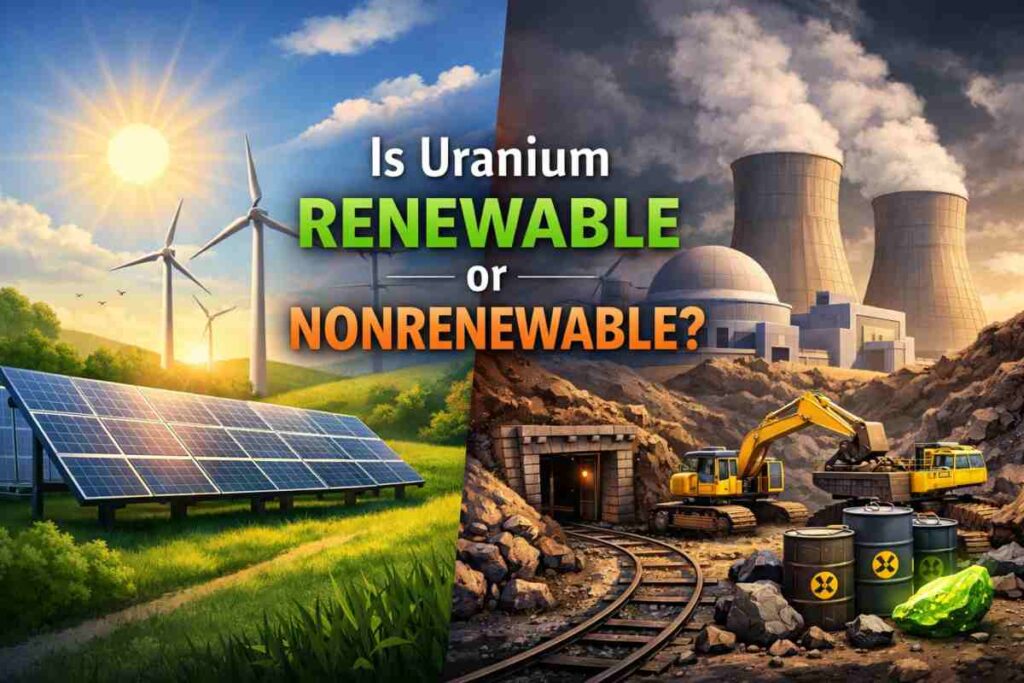
As the world races toward cleaner energy, many people are asking a simple but important question: is uranium renewable or nonrenewable? Nuclear power plants produce low-carbon electricity and run day and night without relying on sunlight or wind. That makes them attractive in the global energy transition. But does that mean the fuel behind them is renewable?
The clear answer is no. Uranium is a nonrenewable resource. It exists in limited amounts within the Earth’s crust and cannot be replaced on a human timescale. Unlike solar or wind energy, which naturally replenish every day, uranium must be mined from finite deposits. Once it is extracted and used in a nuclear reactor, it does not regenerate.
Even though nuclear energy is considered a low-carbon power source, the material that makes it possible comes from a fixed supply. That key difference is what places uranium firmly in the nonrenewable category.
What Is Uranium and How Is It Used in Nuclear Energy?
Uranium is a heavy metal found naturally in rocks and soil beneath the Earth’s surface. It has been used for decades as a powerful uranium fuel source in electricity generation. Inside a nuclear power plant, uranium is processed into small ceramic pellets, stacked into fuel rods, and placed inside a reactor core.
What makes uranium special is its ability to release massive amounts of energy through a process called nuclear fission. Unlike coal or gas, which burn to create heat, uranium atoms are split apart. This atomic reaction produces heat without combustion, which means no carbon dioxide is released during electricity generation.
How Uranium Produces Energy
Think of uranium like a tiny, tightly packed battery inside each atom. When the atom splits, it releases heat. In nuclear fission, one atom breaks apart and triggers others to split in a chain reaction. The heat produced turns water into steam, which spins turbines and generates electricity.
The energy density of uranium is extremely high. A small amount of nuclear fuel can produce far more energy than large amounts of fossil fuels. That’s why nuclear plants can run for long periods without constant refueling.
Why Only a Small Portion Is Usable
Not all uranium can easily power a reactor. Only about 0.7% of natural uranium is uranium-235, the isotope that can sustain fission efficiently. Because this percentage is so small, uranium must go through an enrichment process to increase the concentration of uranium-235 before it can be used effectively in most reactors.
Why Is Uranium Considered Nonrenewable?
To understand why uranium falls into this category, it helps to compare renewable vs nonrenewable resources. Renewable sources like sunlight, wind, and water naturally replenish within a short period of time. Nonrenewable resources, on the other hand, exist in limited quantities and take millions of years to form.
Uranium fits squarely into the second group. It is a uranium nonrenewable resource because it comes from finite deposits in the Earth’s crust. Once these deposits are mined and used, they are gone for practical human purposes.
Limited Natural Supply
Uranium does not regenerate on human timescales. The element formed billions of years ago through natural geological processes. Today, we extract it from specific ore bodies scattered around the world.
Unlike forests that can regrow or solar energy that arrives daily, uranium cannot replenish itself within decades or even centuries. Once it is removed from the ground and used in a reactor, it cannot simply reform underground. That physical limitation is the main reason it is classified as nonrenewable.
How Long Will Uranium Last?
Estimates suggest known global uranium resources could last roughly 40 to 100 years, depending on consumption rates and new discoveries. These projections change based on how many nuclear power plants operate and how quickly demand grows.
If nuclear energy expands worldwide, demand for fuel will increase. While new deposits may be found, the total supply remains limited. Discovery can delay depletion, but it does not make the resource infinite.
Mining and Environmental Impact
Uranium mining also raises environmental concerns. Extracting ore can disrupt habitats, alter landscapes, and affect nearby ecosystems. In some cases, improper handling can increase the risk of radioactive contamination.
Modern regulations aim to reduce these risks, but mining still requires careful oversight. These environmental and supply limits reinforce why uranium is considered a finite energy resource rather than a renewable one.
Is Nuclear Energy Renewable If Uranium Is Not?
This is where many people get confused. If uranium is limited, is nuclear energy renewable? The short answer is no. Nuclear power depends on a finite fuel supply, so it does not meet the strict definition of renewable energy.
However, nuclear energy is often described as a low-carbon energy source, and that’s where the misunderstanding begins. Nuclear power plants produce electricity without burning fossil fuels. During operation, they emit very little carbon dioxide. That makes them attractive in climate discussions, even though the fuel itself is not renewable.
Nuclear plants also provide steady baseload electricity, meaning they run continuously and deliver consistent power regardless of weather conditions. This reliability sets them apart from solar and wind, which depend on sunlight and wind speed.
The Renewable vs Low-Carbon Confusion
It helps to separate three key terms:
- Renewable: Energy that naturally replenishes quickly, like solar or wind.
- Sustainable: Energy that can be maintained long-term with manageable environmental impact.
- Low-carbon: Energy that produces little to no greenhouse gas emissions during operation.
Nuclear energy is low-carbon and can be sustainable under strict safety and waste management practices. But it is not renewable because its fuel supply is limited.
The Role of Nuclear in Clean Energy
Despite this distinction, nuclear power plays a major role in clean energy systems. It provides reliable baseload power and supports climate mitigation efforts by reducing dependence on coal and natural gas. While not renewable, it remains an important tool in lowering global emissions.
Can Breeder Reactors or Recycling Make Uranium Renewable?
Some people argue that advanced technology could change uranium’s status. They point to breeder reactors and recycling nuclear fuel as proof that nuclear energy might eventually become renewable. While these innovations can stretch fuel supplies, they do not turn uranium into an unlimited resource.
Both approaches aim to use more of the material already mined. Instead of relying only on uranium-235, advanced systems can also make use of uranium-238, which is far more abundant.
What Are Breeder Reactors?
Breeder reactors are designed to produce more usable fuel than they consume. They convert plutonium from U-238 into fissile material that can sustain further reactions. In simple terms, they “breed” new fuel from material that would otherwise go unused.
This process can significantly extend uranium supplies. However, breeder reactors are complex, expensive, and raise safety and proliferation concerns. As a result, they are not widely commercialized. Only a few countries have tested or operated them at scale.
Does Recycling Make It Renewable?
Another approach is recycling nuclear fuel. Countries like France reprocess spent fuel to recover usable materials, allowing more energy to be extracted from the same uranium.
Recycling can recover a large portion of remaining energy potential and reduce waste volume. But it does not create new uranium. It simply uses existing material more efficiently. While this extends the lifespan of uranium resources, it does not make the supply infinite.
In the end, these technologies improve efficiency—but they do not change the fact that uranium comes from a finite source.
Pros and Cons of Uranium as an Energy Source
When discussing uranium energy pros and cons, it’s important to look at both performance and long-term impact. Uranium plays a central role in nuclear power, and its strengths are significant. At the same time, its limits raise questions about nuclear power sustainability in the decades ahead.
Advantages
One of the biggest advantages of uranium is its high energy density. A small amount of nuclear fuel can produce enormous amounts of electricity. Compared to fossil fuels, it delivers far more energy from much less material. This efficiency allows nuclear power plants to operate for long periods without frequent refueling.
Another major benefit is low greenhouse gas emissions during operation. Nuclear reactors do not burn fuel the way coal or natural gas plants do. As a result, they produce electricity without releasing carbon dioxide into the atmosphere. This makes nuclear energy an important tool in reducing emissions and fighting climate change.
Uranium also supports reliable output. Nuclear plants provide steady, around-the-clock power, often described as baseload electricity. Unlike solar or wind, they are not dependent on weather conditions.
Disadvantages
Despite these strengths, uranium has clear drawbacks. It is a finite resource, meaning global supplies are limited. Once mined and used, it cannot be naturally replaced within a human lifetime.
There are also waste storage challenges. Spent nuclear fuel remains radioactive and must be carefully managed for long periods. Safe storage requires strict oversight and long-term planning.
Finally, mining impact cannot be ignored. Extracting uranium can disrupt ecosystems and, if poorly managed, pose environmental and health risks. These factors shape ongoing debates about the long-term sustainability of nuclear energy.
Final Answer: Is Uranium Renewable or Nonrenewable?
So, is uranium renewable or nonrenewable? The clear answer is that uranium is nonrenewable. It comes from limited deposits in the Earth’s crust and cannot regenerate on a human timescale. Once mined and used in a nuclear reactor, it does not naturally replenish like sunlight, wind, or flowing water.
The key reasons are simple. Uranium exists in finite amounts, requires extraction through mining, and is gradually depleted as global demand continues. Even advanced technologies like fuel recycling or breeder reactors can only extend supply—not create new uranium.
That said, nuclear energy still plays an important role in the global energy mix. It is a low-carbon power source that produces reliable electricity without releasing greenhouse gases during operation. While the fuel itself is limited, its ability to generate large amounts of clean power makes it valuable in climate efforts.
Looking ahead, the focus will likely remain on balancing nuclear power with renewable energy sources to build a more stable, low-emission future.
Frequently Asked Questions
Why is uranium considered a nonrenewable resource?
Uranium is considered nonrenewable because it exists in finite deposits within the Earth’s crust and cannot naturally replenish on human timescales once mined and used.
How long will uranium supplies last?
Current estimates suggest known uranium resources could last around 40 to 100 years, depending on global demand, reactor expansion, and new discoveries.
Is nuclear energy renewable or sustainable?
Nuclear energy is not renewable because its fuel is limited. However, it can be sustainable and low-carbon if managed with strong safety, waste, and environmental controls.
Can uranium be recycled?
Yes, spent nuclear fuel can be reprocessed to recover usable materials. Recycling extends fuel efficiency but does not make uranium an unlimited resource.
What is a breeder reactor?
A breeder reactor is a type of nuclear reactor that produces more fissile material, such as plutonium, than it consumes, extending available fuel supplies.
Is uranium better than fossil fuels?
Uranium produces far fewer greenhouse gas emissions during operation than fossil fuels. However, it presents challenges like radioactive waste and finite supply limits.
Read Also: How Droven.io AI Automation in USA Is Transforming Modern Businesses