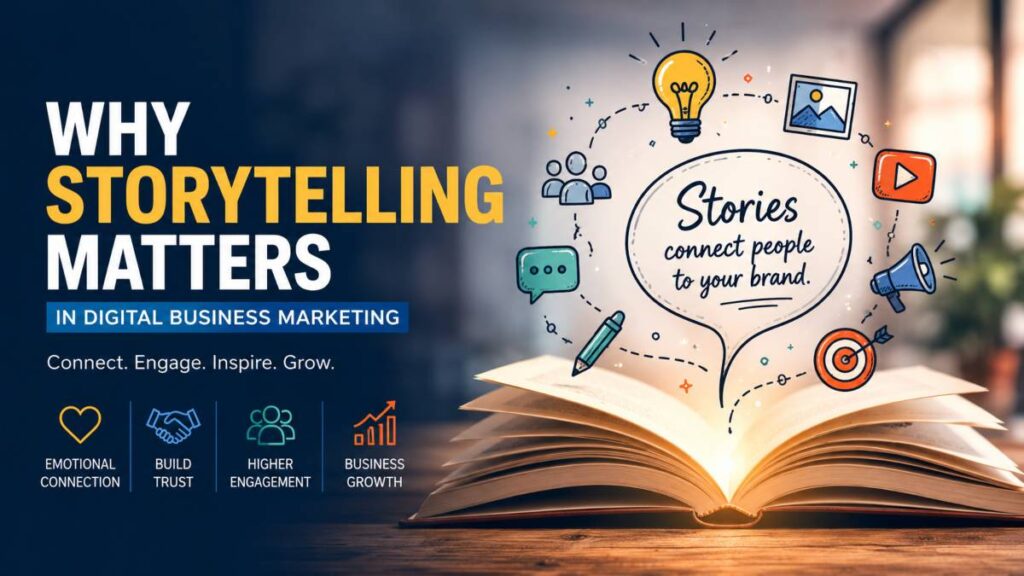
Every day, businesses pour money into digital campaigns that vanish from people’s minds within seconds. A flashy headline might grab attention for a moment, but attention alone rarely builds loyalty. This is exactly why storytelling matters in digital business marketing. Stories give brands something most advertisements fail to create, which is emotional connection.
People are surrounded by promotions everywhere they scroll. Social feeds, emails, video ads, and sponsored content compete for the same limited attention span. Facts and product features often blur together, but a relatable story stays with people long after they close the screen. When customers see real experiences, personal struggles, or meaningful transformations, they feel connected to the brand behind the message.
Storytelling also builds trust in a way direct sales language cannot. A brand that shares authentic customer journeys or honest experiences feels more human and approachable. That sense of authenticity encourages engagement because audiences are more likely to interact with content that feels personal rather than purely promotional.
Strong storytelling turns digital marketing into something people want to read instead of something they skip. It creates memorable moments, strengthens brand identity, and helps businesses form lasting relationships with customers who value emotion just as much as logic.
What Is Storytelling in Digital Marketing?
Definition of Marketing Storytelling
Storytelling in digital marketing is the practice of using narratives to communicate a brand message in a more human and engaging way. Instead of pushing products with aggressive sales language, businesses use stories to show experiences, emotions, challenges, and outcomes that audiences can connect with personally. It transforms marketing from a simple transaction into a conversation people actually care about.
A strong narrative marketing strategy usually follows a clear path. There is a problem, a journey, and a result. Rather than saying a product is fast or reliable, brands show how it helped someone overcome a real challenge or improve their daily life. This approach gives audiences context and emotion instead of plain information.
There is also a major difference between selling and storytelling. Traditional selling focuses heavily on features, pricing, and direct promotion. Storytelling focuses on people. It creates meaning around the product by showing how it fits into real experiences. Customers are far more likely to trust and remember a brand when they can see themselves inside the message.
Why Human Brains Respond to Stories
Human beings naturally respond to stories because emotions shape how people think, remember, and make decisions. Emotional marketing works because audiences rarely connect with dry facts alone. A relatable story can create empathy, curiosity, excitement, or inspiration within seconds.
Stories also improve memory retention. People may forget statistics or product specifications quickly, but they often remember a meaningful narrative for a long time. This happens because stories activate emotion and imagination together, making the information easier to process and recall later.
Relatability is another reason storytelling in digital marketing performs so well. Customers want to feel understood. When brands share situations that reflect real frustrations, goals, or aspirations, audiences feel a stronger personal connection. That emotional connection often leads to higher engagement, stronger trust, and better customer loyalty over time.
Why Storytelling Works Better Than Traditional Marketing
Traditional marketing often pushes products directly at consumers with sales focused language, feature lists, and repetitive advertising. The problem is that modern audiences have become skilled at ignoring content that feels overly promotional. People scroll past ads quickly because most of them sound the same. Storytelling changes that dynamic by creating an experience instead of a sales pitch. It gives audiences a reason to pause, connect, and remember.
Stories Create Emotional Connection
One of the biggest strengths of storytelling is its ability to create emotional connection. People are naturally drawn to experiences they can relate to emotionally. A story about overcoming a challenge, chasing a goal, or solving a real problem feels personal in a way traditional advertising rarely does.
Human centered messaging helps brands appear more relatable and approachable. Instead of presenting themselves as faceless companies, businesses become part of a customer’s everyday reality. This emotional bond can strengthen customer loyalty because people are more likely to support brands that make them feel understood.
Strong storytelling also improves customer engagement. Audiences are more likely to comment, share, and interact with content that creates emotion. A relatable narrative encourages people to see themselves inside the message, which makes the content more meaningful and memorable.
Stories Improve Brand Recall
Facts alone are easy to forget. Stories stay in people’s minds because they combine emotion with mental imagery. When audiences picture a situation, a struggle, or a transformation, the message becomes easier to remember.
For example, a statement like “our software improves workflow” may sound informative, but it lacks emotional impact. A short story about a business owner saving hours of work every week creates a visual experience people can imagine clearly. That image increases memory retention and helps brands remain memorable long after someone leaves the page.
This is one reason storytelling for brand awareness works so well in digital spaces filled with constant noise and distraction. A meaningful story creates a stronger impression than a list of product features ever could.
Stories Build Trust and Authenticity
Modern consumers value honesty and transparency more than polished advertising language. Authentic brand messaging helps businesses appear genuine because stories often include real experiences, customer journeys, and relatable struggles.
When brands share customer success stories or real world examples, they feel more trustworthy. Audiences are far more likely to believe a business when they can see actual experiences instead of exaggerated claims. This sense of authenticity builds stronger relationships and encourages long term loyalty.
Storytelling also gives businesses an opportunity to communicate their values naturally. Instead of telling audiences what the brand stands for, companies can show it through actions, experiences, and customer outcomes. That human element is what makes storytelling far more persuasive than traditional marketing alone.
Business Benefits of Storytelling in Digital Marketing
Digital marketing is crowded with brands competing for the same attention every single day. Businesses that rely only on promotional messaging often struggle to keep audiences interested for long. Storytelling changes the experience by making marketing feel personal, relatable, and emotionally engaging. Instead of simply promoting products, brands create meaningful connections that encourage people to pay attention and take action. This is why storytelling in content marketing has become such an important part of modern business strategy.
Higher Engagement Across Digital Channels
Stories naturally attract attention because people enjoy content that feels human rather than overly corporate. Across blogs, social media, email campaigns, and video marketing, storytelling gives audiences something worth reading, watching, or sharing.
In blog content, storytelling helps transform educational articles into experiences readers can connect with emotionally. On social media, short relatable narratives often perform better than plain promotional captions because they encourage conversation and interaction. Email campaigns also become more engaging when they focus on customer experiences or relatable situations instead of constant sales language.
Video marketing benefits especially well from storytelling because visuals and emotion work together to create stronger audience reactions. A short customer journey or behind the scenes brand story can keep viewers interested far longer than a direct advertisement and many brands use formats developed by an animated video production company to make those narratives more engaging and memorable.
This emotional layer increases customer interaction across digital platforms and helps businesses maintain stronger relationships with their audience over time.
Better Conversion Rates
One of the biggest advantages of storytelling for conversions is its ability to make products feel relevant to real life situations. Customers rarely purchase something based on features alone. They buy solutions, outcomes, and emotional benefits.
Story driven landing pages perform well because they guide visitors through a relatable experience. Instead of immediately listing product specifications, they show a challenge, introduce a solution, and reveal the transformation that followed. This structure feels more persuasive because people can imagine themselves achieving the same result.
For example, feature based messaging might say, “Our project management software improves productivity.” Storytelling takes a different route by saying, “A small creative agency struggled with missed deadlines until one organized system helped the team regain control of every project.” The second version creates imagery, emotion, and relatability, which makes the message more convincing.
This approach strengthens emotional persuasion because audiences connect with outcomes instead of technical details alone.
Stronger Brand Identity
Storytelling for business growth also plays a major role in shaping brand identity. Businesses with strong storytelling create a recognizable voice and personality that audiences remember easily.
A unique story helps brands separate themselves from competitors in crowded markets where many products appear similar. Customers may forget features or pricing, but they often remember how a brand made them feel. That emotional impression becomes part of the company’s identity.
Storytelling also allows businesses to communicate values, mission, and culture naturally. Whether through founder stories, customer experiences, or brand journeys, companies can create a more authentic presence online. This makes the business feel more relatable and memorable, which can strengthen long term customer loyalty and recognition.
Where Businesses Can Use Storytelling Online
Storytelling works best when it becomes part of a brand’s everyday communication across multiple digital channels. Modern audiences expect more than promotional content. They want relatable experiences, authentic voices, and meaningful interactions. Businesses that use storytelling consistently across online platforms often create stronger engagement and deeper customer trust.
Website and Landing Pages
A website is usually the first interaction customers have with a business, which makes storytelling especially valuable. Instead of filling pages with technical details and sales focused copy, brands can guide visitors through a customer journey that feels personal and relatable.
Problem to solution narratives work particularly well on landing pages. Rather than immediately pushing a product, businesses can show the challenges customers face and explain how the product improved their situation. This structure helps visitors picture themselves achieving similar results.
Story based messaging also makes websites feel more human. Customers are more likely to stay engaged when content feels conversational and emotionally relevant instead of purely promotional.
Social Media Marketing
Storytelling in social media marketing allows brands to connect with audiences quickly in spaces filled with constant scrolling and short attention spans. Short form storytelling can create strong impact even within a few sentences or a short video clip.
Behind the scenes content helps businesses appear more authentic because it reveals the people, culture, and daily experiences behind the brand. Founder stories also perform well because audiences enjoy learning how businesses started, what challenges they faced, and what drives their mission.
Social media stories that feel honest and relatable often encourage more interaction than direct advertising. They create emotional connection while making the brand easier to remember.
Email Marketing Campaigns
Storytelling in email marketing helps brands create messages people actually want to open and read. Instead of sending repetitive promotional emails, businesses can share customer journeys, lessons learned, or relatable situations that connect emotionally with readers. A clean email template serves as the foundation for this narrative approach by ensuring that your visuals and text stay focused on the human element rather than distracting from the core story.
Personalized storytelling makes email campaigns feel less automated and more conversational. A simple customer success story can make readers feel inspired while naturally showing the value of a product or service.
This approach keeps audiences engaged without making every email feel like a sales pitch.
Case Studies and Testimonials
Case studies and testimonials are among the strongest business storytelling examples because they focus on real customer experiences. Instead of simply saying a product works, brands can show how it helped someone solve a genuine problem or achieve a meaningful goal.
Narrative driven testimonials create stronger social proof because they feel believable and relatable. Customers trust stories from other customers far more than polished promotional claims. When businesses present authentic experiences with clear results, they strengthen credibility and encourage potential buyers to take action.
Examples of Brands That Use Storytelling Well
Some of the world’s most recognizable brands have mastered storytelling by making customers feel something beyond the product itself. Instead of relying only on advertisements or technical details, these companies create narratives that connect with identity, emotion, and personal experience.
Nike
Nike has built its marketing around emotion driven storytelling for years. The brand rarely focuses only on shoes or athletic gear. Instead, its campaigns center around determination, resilience, ambition, and self belief.
Many Nike advertisements tell stories about athletes overcoming obstacles, pushing limits, or chasing personal goals. These narratives connect with audiences because they represent aspiration and identity rather than simple product promotion. Customers are not just buying sportswear. They are buying into a mindset and a feeling of possibility.
This emotional connection helps Nike remain memorable across different audiences and generations.
Apple
Apple uses storytelling through simplicity and lifestyle focused messaging. Instead of overwhelming customers with technical specifications, the brand often shows how its products fit naturally into daily life.
Apple campaigns usually focus on creativity, communication, productivity, and human experience. A short video showing someone creating music, capturing memories, or connecting with loved ones says far more than a list of device features.
This storytelling style makes the customer the center of the narrative rather than the product itself. That approach creates a cleaner and more relatable brand image that audiences instantly recognize.
Airbnb
Airbnb stands out because it relies heavily on user generated travel experiences. The company’s storytelling focuses on real people, authentic moments, and cultural connection instead of traditional hospitality advertising.
Rather than simply promoting accommodations, Airbnb highlights stories about travelers discovering new places, meeting local communities, and creating memorable experiences. These personal narratives make the platform feel warm, relatable, and experience driven.
By allowing customers to share their own journeys, Airbnb creates trust and emotional connection naturally. It also gives the brand an endless stream of authentic content that feels personal instead of overly commercial.
How to Start Using Storytelling in Your Marketing Strategy
Many businesses assume storytelling requires dramatic campaigns or cinematic videos, but effective storytelling often starts with simple and relatable experiences. The goal is not to sound fictional or overly polished. The goal is to make audiences feel understood. Strong brand storytelling strategies focus on emotion, authenticity, and clarity instead of complicated messaging.
Know Your Audience
Every successful storytelling strategy for brands begins with understanding the audience deeply. Businesses need to know what their customers struggle with, what motivates them, and what emotional triggers influence their decisions.
People connect with stories that reflect their own experiences. A business targeting busy entrepreneurs will speak differently from one targeting students or families. When brands understand customer pain points clearly, they can create stories that feel personal instead of generic.
Audience research also helps businesses choose the right tone and message. Some audiences respond to inspiration, while others connect more with honesty, humor, or practical transformation. The more relatable the story feels, the stronger the emotional response becomes.
Use a Simple Story Structure
One reason digital marketing storytelling works so well is because stories naturally guide people through information in a clear and engaging way. Businesses do not need overly complex narratives to make an impact. In most cases, a simple structure works best.
Start with a problem the audience recognizes. Then show the journey toward solving that challenge. After that, present the solution and explain the result or transformation that followed.
This structure creates emotional flow while keeping the message easy to follow. It also helps audiences imagine themselves experiencing the same positive outcome. Whether it appears in a blog post, social media caption, landing page, or video campaign, this storytelling format keeps content focused and memorable.
Focus on Real Experiences
Authenticity matters more than perfection. Customers respond strongly to real experiences because they feel believable and human. Businesses can use customer stories, founder experiences, or team insights to create stronger emotional connection.
A founder explaining why the company started often feels more meaningful than polished corporate messaging. Customer success stories also work well because audiences trust genuine experiences more than promotional claims.
Real stories give brands personality and emotional depth without sounding forced.
Keep the Message Consistent
Consistency is one of the most important parts of strong storytelling. A brand should sound recognizable across websites, social media platforms, emails, and advertisements.
When businesses maintain a unified tone and strong brand voice, audiences begin to associate certain emotions and values with the company naturally. Consistency builds familiarity, and familiarity strengthens trust over time.
A clear storytelling approach across all platforms helps businesses create stronger identity, stronger connection, and more memorable digital marketing campaigns. A clear storytelling approach across all platforms helps businesses create stronger identity, stronger connection, and more memorable digital marketing campaigns, making it a valuable component of effective Digital Marketing Services.
Common Storytelling Mistakes Businesses Should Avoid
Storytelling can strengthen digital marketing dramatically, but only when it feels authentic and audience focused. Many businesses struggle because they approach storytelling like a sales presentation instead of a human conversation. A few common mistakes can weaken the emotional impact and make content easier to ignore.
Making the Brand the Hero
One of the biggest mistakes businesses make is placing themselves at the center of every story. Customers do not want to hear endless praise about a company. They want to see how the business improves their lives or solves real problems.
The customer should feel like the main character while the brand acts as the guide that helps them achieve a better outcome. When storytelling becomes overly self promotional, audiences quickly lose interest.
Using Generic Stories
Generic storytelling often feels artificial because it lacks detail, emotion, and personality. Audiences can easily recognize vague messaging that sounds copied from countless other brands.
Stories become stronger when they include specific experiences, relatable challenges, and realistic outcomes. Even simple moments can feel powerful when they sound honest and personal. Businesses that rely on broad statements without emotional depth often struggle to create meaningful engagement.
Ignoring Audience Emotion
Facts alone rarely create connection. Businesses sometimes focus so heavily on information that they forget how important emotion is in storytelling.
Customers remember how a message made them feel far more than they remember technical details. Whether the emotion is inspiration, relief, excitement, or empathy, storytelling works best when audiences feel emotionally involved in the narrative.
Overloading Content With Sales Language
Too much promotional language can ruin even a strong story. When every paragraph pushes a product aggressively, the content begins to feel like an advertisement instead of a genuine experience.
Good storytelling creates persuasion naturally through relatable situations and emotional connection. Businesses that focus only on selling often weaken trust and reduce audience engagement.
Final Thoughts
Digital marketing has become increasingly crowded, which makes genuine connection more valuable than ever. Audiences are exposed to endless promotions every day, yet very little of it feels memorable. Storytelling changes that by bringing emotion, personality, and human experience into marketing communication.
Brands that use storytelling successfully do more than sell products or services. They create moments people relate to, remember, and trust. A meaningful story can strengthen engagement, improve brand recognition, and build stronger customer relationships over time. It transforms marketing from simple promotion into something audiences actually care about.
The strongest digital campaigns are often the ones that feel the most human. Whether through customer experiences, founder journeys, behind the scenes moments, or relatable challenges, stories help businesses create authenticity in spaces filled with noise and repetition.
Businesses do not need massive budgets or cinematic campaigns to make storytelling work. Small changes in messaging can create a major difference in how audiences respond. Review your current marketing content and look for areas where plain promotional language can be replaced with relatable experiences, emotional connection, and real customer stories.
As digital audiences continue craving authenticity, brands that communicate with honesty and emotion will remain far more memorable than those relying only on sales driven messaging.