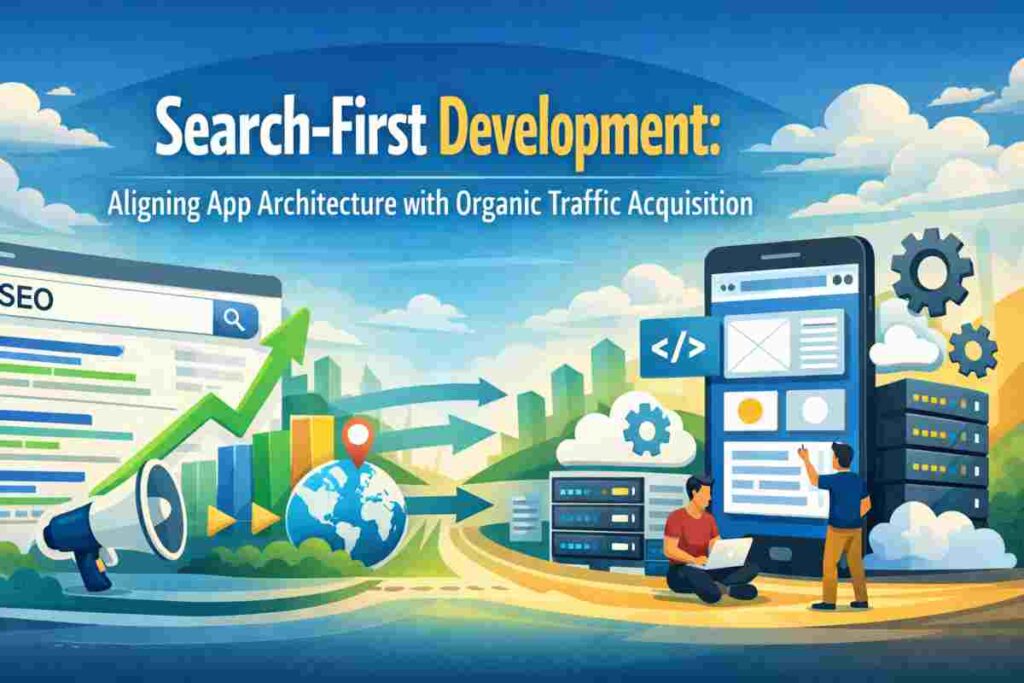
Search performance is often treated as a marketing outcome, yet in modern digital ecosystems it is increasingly shaped by product and engineering decisions. Websites and applications are no longer static pages but dynamic systems that deliver content through complex frontend and backend interactions. This shift means that visibility in search engines depends not only on keywords and backlinks but also on how efficiently a product exposes, structures, and delivers its content.
Many organizations invest in content production and link building while overlooking technical constraints that limit indexation and crawlability. JavaScript-heavy interfaces, poorly structured routing, and slow rendering pipelines can prevent search engines from accessing or understanding key content. As a result, even high-quality content fails to achieve expected rankings. Decision-makers who recognize this gap can reposition SEO as a cross-functional discipline that integrates engineering, product design, and marketing strategy.
How App Architecture Impacts Crawlability, Indexing, and SEO Performance
App architecture determines how content is generated, rendered, and delivered to both users and search engines, which directly affects crawl efficiency and index coverage. When systems rely heavily on client-side rendering without proper optimization, search engines may struggle to process content in a timely manner, leading to incomplete indexing and reduced visibility. This issue becomes more pronounced as applications grow in complexity, especially when content is loaded dynamically based on user interaction.
To address these challenges, modern development approaches prioritize hybrid rendering strategies, efficient routing, and structured data delivery. Server-side rendering and static generation ensure that critical content is immediately accessible to crawlers, while client-side interactivity enhances user experience without blocking indexation. This balance is essential for platforms that aim to scale organic traffic without sacrificing performance.
Development practices used in advanced solutions such as cross-platform apps by Binary Studio illustrate how architecture can support both performance and accessibility. These systems often rely on shared codebases that maintain consistency across platforms while optimizing rendering strategies to ensure fast load times and reliable content delivery. By combining performance optimization with structured content exposure, such approaches enable applications to remain both user-friendly and search-engine-friendly. For organizations focused on SEO, this demonstrates that technical architecture must be designed with crawlability and indexation in mind from the outset, rather than treated as an afterthought.
Rendering Strategy as a Ranking Factor
Rendering determines how quickly and accurately search engines can access content. Systems that delay content generation or rely on complex client-side processes introduce friction that reduces crawl efficiency. Choosing the right rendering approach ensures that content is available immediately and consistently.
URL Structure and Routing Logic
Clear and predictable URL structures help search engines understand site hierarchy and content relationships. Poor routing logic, especially in single-page applications, can create duplicate content issues or prevent proper indexing of key pages.
Performance and Core Web Vitals
Performance metrics such as loading speed, interactivity, and visual stability influence both user experience and search rankings. Optimizing these metrics requires collaboration between frontend and backend teams to ensure efficient resource delivery.
Data Accessibility and Structured Content
Search engines rely on structured data to interpret content. Applications must expose information in a way that is easily understood, which includes using semantic markup and consistent content models.
Building Scalable Organic Growth Through Product-Led SEO Systems
Sustainable SEO growth requires more than optimizing individual pages. It depends on building systems that can generate, organize, and improve content at scale. This approach, often referred to as product-led SEO, integrates content generation with application logic, enabling platforms to expand their visibility without proportional increases in manual effort.
Product-led SEO systems leverage structured data and automation to create pages that address specific user intents. For example, platforms that generate location-based or category-based pages can capture long-tail search demand by systematically covering a wide range of queries. This strategy requires careful planning to ensure that generated content remains valuable and avoids duplication.
- identify scalable content opportunities based on search demand
- design templates that maintain quality across generated pages
- integrate data sources to populate content dynamically
- continuously optimize based on performance metrics
This framework allows organizations to grow organic traffic efficiently while maintaining control over content quality.
Another critical component is aligning user experience with search intent. Pages must not only attract users but also satisfy their expectations, which improves engagement metrics and reinforces rankings. This requires integrating analytics into the development process, enabling teams to measure how users interact with content and identify areas for improvement.
- automated content generation aligned with search demand
- consistent user experience across large-scale page sets
- data-driven optimization based on real user behavior
- integration of SEO considerations into product development
These elements create a system where growth is driven by both technical efficiency and user relevance.
Balancing Scale and Quality
Scaling content without maintaining quality leads to diminishing returns. Systems must ensure that generated pages provide real value, which requires continuous monitoring and refinement.
Integrating SEO into Product Development
SEO should be considered at every stage of product development, from initial architecture to feature updates. This ensures that new features support rather than hinder search performance.
Leveraging Analytics for Continuous Improvement
Data provides insight into how users and search engines interact with a platform. Continuous analysis allows organizations to refine their systems and improve outcomes over time.
Building for Long-Term Sustainability
Short-term SEO gains often rely on tactics that do not scale. Sustainable growth requires systems that can adapt to algorithm changes and evolving user behavior without requiring constant manual intervention.
Strategic Implications for Decision-Makers
Decision-makers must recognize that SEO performance is increasingly determined by how well product and engineering teams collaborate with marketing functions. Investments in content and link acquisition will not deliver full value if technical systems limit visibility or accessibility. This requires a shift toward integrated planning, where SEO considerations influence architectural decisions from the earliest stages.
Organizations that adopt a search-first development approach can create competitive advantages by ensuring that their platforms are both discoverable and performant. This includes investing in scalable architectures, establishing cross-functional workflows, and prioritizing long-term growth over short-term gains.
Conclusion
Search visibility is no longer a standalone marketing outcome but a direct reflection of how well a product is engineered. App architecture influences crawlability, indexation, and user experience, all of which contribute to SEO performance.
Organizations that align development practices with SEO objectives create systems that can scale organic traffic efficiently while maintaining high performance and user satisfaction.