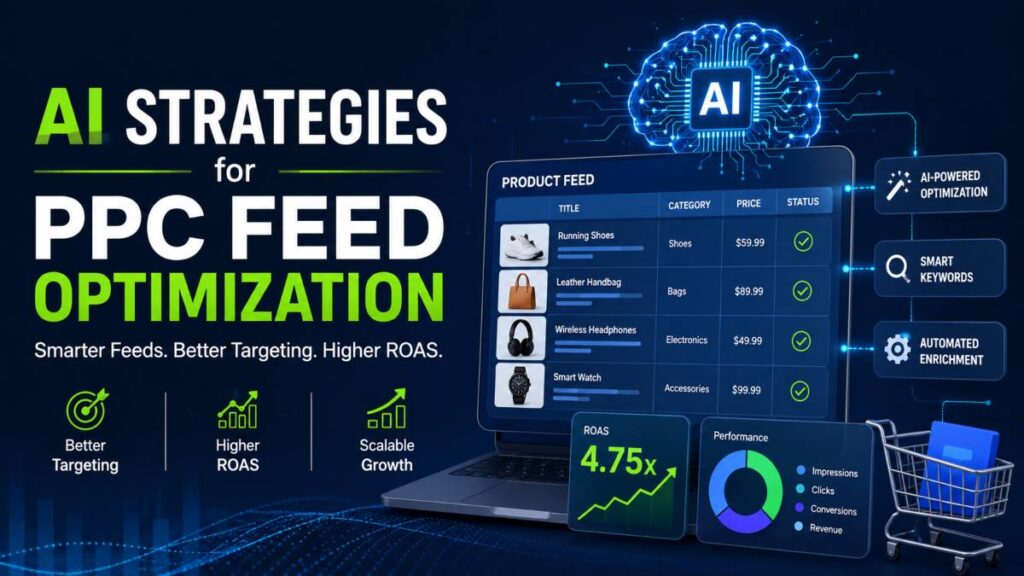
Most PPC campaigns do not fail because of bad products. They fail because the product feed is a mess.
Weak titles. Missing attributes. Broken categories. Generic descriptions that say nothing and sell even less. The ads go live, the budget burns, and somewhere inside the dashboard sits a quiet disaster disguised as average performance.
This is where AI changes the game.
Not with magic. Not with empty promises. With speed, pattern recognition, and the ability to clean, organize, and sharpen product data at a scale humans simply cannot match consistently.
Modern PPC platforms feed on data. The better your feed, the better your targeting, visibility, and conversion potential become. AI helps shape that data into something search engines and shoppers actually understand. Product titles become sharper. Categories become cleaner. Missing details get filled before they turn into disapprovals and wasted spend.
The result is not just better traffic. It is smarter traffic.
For ecommerce brands running campaigns across Google Shopping, Microsoft Ads, or social commerce platforms, feed optimization is no longer a side task buried under campaign setup. It sits at the center of performance.
In this guide, we break down the most useful AI strategies for PPC feed optimization, from automated categorization and keyword enrichment to predictive bidding support and feed testing that moves real numbers. Because when the feed improves, everything connected to it starts moving faster.
What Is PPC Feed Optimization?
PPC feed optimization is the process of improving product data so advertising platforms can better understand, match, and display your products to shoppers. The feed acts like the engine behind ecommerce ads. If the data is weak, the campaign struggles. If the data is clean and detailed, the ads perform better.
Every title, image, category, attribute, and description inside the feed affects how products appear in search results and shopping ads.
How Product Feeds Power PPC Campaigns
Platforms like Google Shopping, Microsoft Advertising, and social commerce systems rely heavily on product feeds. These feeds tell the platform what the product is, who it is for, and when it should appear.
A single product feed can include titles, pricing, availability, colors, sizes, GTINs, and product categories. Advertising systems scan this information to decide where and when your ads show up.
If the feed lacks detail or contains errors, the platform struggles to match products with relevant searches. That usually means lower visibility and weaker campaign performance.
Why Feed Quality Affects Ad Performance
Strong feed quality improves product visibility. Better titles and accurate attributes help products appear for more relevant searches, which increases the chances of attracting buyers who are ready to click.
Feed quality also connects directly to CTR and ROAS. When shoppers see clear product information that matches their search intent, they are more likely to engage with the ad and complete a purchase.
A poorly optimized feed wastes impressions. A refined feed turns product data into a stronger sales channel.
Why AI Is Changing PPC Feed Management
Managing PPC feeds manually used to be manageable when catalogs were small. Now brands deal with thousands of products across multiple platforms, each with different rules, formats, and search behaviors. That level of complexity turns simple updates into a constant grind.
AI changes that by handling repetitive feed work faster and with far fewer mistakes.
Manual Feed Management Problems
Traditional feed management takes time. Teams often spend hours fixing missing attributes, rewriting titles, correcting categories, and checking feed errors.
The larger the catalog becomes, the harder it gets to maintain consistency. One missing GTIN or wrong category can hurt visibility or even trigger product disapprovals.
Human errors also stack up quickly. A typo in a title, incorrect sizing data, or outdated availability information can damage campaign performance without being noticed right away.
Manual workflows slow everything down, especially when product data changes daily.
How AI Improves Feed Accuracy and Speed
AI tools automate many of these repetitive tasks. They can map product categories, fill missing attributes, clean product data, and generate optimized titles within minutes.
Instead of updating feeds one product at a time, AI systems process entire catalogs at scale. That speed matters when managing seasonal promotions, inventory changes, or large ecommerce stores.
AI also supports real time adjustments. If search trends shift or platform requirements change, feed data can adapt faster without relying on manual edits across hundreds of listings.
This creates cleaner feeds with stronger consistency.
Better Data Leads to Better PPC Results
Advertising platforms rely heavily on product data to decide when and where ads appear. Better feed quality gives algorithms clearer signals about the product, audience, and search intent.
That leads to smarter targeting and stronger ad relevance. Products appear in more accurate searches, which increases click through rates and improves conversion potential.
Clean feed data also cuts wasted spend. Instead of paying for weak traffic from poor product matching, brands attract users who are already closer to buying.
The result is stronger campaign efficiency and better return on ad spend without increasing budget blindly.
Core AI Strategies for PPC Feed Optimization
AI becomes most useful when it handles the parts of feed management that drain time and damage performance when done poorly. From cleaning product data to improving search relevance, the right strategy can turn an average feed into a stronger revenue driver.
AI Powered Auto Mapping and Categorization
One of the biggest feed problems comes from incorrect product categorization. If products land in the wrong category, platforms struggle to understand what they are and who should see them.
AI tools solve this by scanning product information and automatically matching items with the correct categories. Instead of manually sorting thousands of listings, the system handles the heavy lifting in seconds.
This improves feed compliance across platforms like Google Shopping and Microsoft Advertising. Cleaner categorization also increases the chances of products appearing in relevant searches, which helps campaigns perform more consistently.
Attribute Enrichment With AI
Missing product details quietly damage PPC campaigns. A product without color, size, brand data, or GTIN information becomes harder for platforms to match with buyer intent.
AI helps fill these gaps automatically. It scans existing inventory patterns and uses available product data to complete missing attributes with stronger accuracy.
This process improves feed quality while reducing product disapprovals caused by incomplete information. It also improves search matching because platforms have more details to work with when deciding where ads should appear.
Richer product data usually leads to stronger visibility and more qualified traffic.
AI Generated Product Titles and Descriptions
Product titles play a major role in shopping ads. Weak titles limit visibility. Generic descriptions waste valuable space.
AI tools can generate stronger titles using search focused keywords and platform specific formatting. Instead of random keyword stuffing, the system builds titles around phrases shoppers are already searching for.
Descriptions also become sharper and more relevant. AI can adjust wording based on category, audience intent, and ad platform requirements.
This helps products appear in better search placements while improving click through rates from users who see exactly what they want.
Dynamic Feed Adjustments for Performance Max
Performance Max campaigns depend heavily on feed quality because automation handles much of the targeting and placement process.
AI helps keep feeds updated in real time by refining product information based on performance trends. If certain keywords, categories, or product variations gain traction, feed data can adjust faster to support those changes.
This creates stronger audience relevance across search, shopping, display, and video placements.
Instead of treating the feed like a static file, AI turns it into a living system that reacts to behavior, trends, and campaign performance as conditions change.
Advanced AI Techniques That Improve ROAS
Basic feed cleanup helps campaigns run better. Advanced AI techniques push performance further by improving targeting, testing, and budget control at scale. This is where feed optimization stops being maintenance work and starts becoming a growth strategy.
AI Keyword Research for Shopping Feeds
Search behavior changes constantly. Products that performed well last month may lose visibility when trends shift or buyer language changes.
AI tools help track these changes by scanning search patterns and identifying high intent keywords tied to buying behavior. Instead of guessing which phrases matter, advertisers can build titles and attributes around terms shoppers actively use.
This improves product relevance inside shopping platforms. Better keyword placement helps products appear for more valuable searches, which increases the chances of attracting buyers who are already close to making a purchase.
The result is stronger traffic quality instead of just higher traffic volume.
Automated A B Testing for Product Feeds
Manual testing across large catalogs becomes difficult fast. AI speeds up this process by creating and testing multiple feed variations automatically.
Different product titles, descriptions, categories, and image combinations can run against each other to measure which version performs best. Small adjustments often create major differences in click through rates and conversion value.
AI also shortens the testing cycle. Instead of waiting weeks to spot patterns manually, systems identify winning variations faster and shift focus toward stronger performers.
This creates a more flexible feed structure that improves over time through constant experimentation.
Predictive Bidding and Feed Alignment
Smart bidding systems rely heavily on feed quality. The better the data, the stronger the platform can predict user intent and allocate budget.
AI helps align feed optimization with predictive bidding strategies by feeding cleaner and more detailed signals into the campaign. Products with richer attributes and stronger search relevance give bidding systems more confidence when choosing where to spend.
This improves budget efficiency because ad spend moves toward products and audiences with higher conversion potential instead of spreading evenly across weak listings.
Better data creates smarter bidding decisions.
Custom Labels and Smart Segmentation
Not every product deserves the same budget or visibility. Some items drive higher margins, stronger conversion rates, or better long term value.
AI helps organize these products through custom labels and segmentation strategies. High value SKUs can be grouped based on performance, seasonality, profit margins, or inventory levels.
This makes campaign prioritization easier. Advertisers can increase focus on products that matter most while reducing spend on weaker inventory.
Smarter segmentation creates more control over scaling and helps campaigns grow without wasting budget on low value traffic.
Best AI Tools for PPC Feed Optimization
The right tools can turn feed management from a constant cleanup job into a smoother system built for scale. Some focus on automation. Others improve creative quality, keyword targeting, or campaign control. The best setup usually combines several tools working together.
DataFeedWatch for Feed Automation
DataFeedWatch is widely used for simplifying feed management across shopping platforms and marketplaces. Its strongest feature is automation.
The platform handles auto mapping by matching product fields with platform requirements automatically. This cuts down manual setup time and reduces feed errors that often hurt visibility.
It also improves category optimization by helping products land in the correct search categories. Cleaner categorization gives advertising systems clearer signals, which helps products appear in more relevant searches.
For large ecommerce catalogs, this saves hours of repetitive work.
FeedOps for AI Creative Optimization
FeedOps focuses heavily on feed enrichment and AI powered optimization for platforms like Performance Max.
The tool improves product titles, descriptions, and feed structure while adapting content for platform specific performance. This helps campaigns stay more relevant across search, shopping, video, and social placements.
FeedOps also supports AI creative optimization, helping brands build stronger product listings without rewriting everything manually.
For advertisers running Performance Max campaigns, cleaner feeds usually translate into stronger targeting signals and improved campaign efficiency.
ChatGPT and GPT for Sheets
ChatGPT and GPT powered spreadsheet tools work well for bulk content optimization.
They can generate product titles, rewrite descriptions, insert keywords, and organize feed data across large catalogs quickly. Instead of editing listings one by one, teams can scale updates across hundreds or thousands of products.
These tools are especially useful for keyword scaling because they help build search focused variations faster while maintaining consistency across the feed.
They also offer a lower cost option for brands starting with AI based optimization.
Optmyzr and Google Ads Editor
Optmyzr and Google Ads Editor help businesses and any Google Ads agency connect feed improvements with broader PPC campaign management.
These tools support workflow automation, campaign updates, bidding adjustments, and bulk optimization tasks. They give advertisers more control when managing large scale campaigns tied directly to product feeds.
When feed data and campaign structure work together cleanly, PPC systems perform more efficiently and become easier to scale over time.
Step by Step PPC Feed Optimization Process Using AI
AI works best when the process behind it is structured. Throwing automation at a messy product feed rarely fixes the real problem. A cleaner workflow gives AI better data to work with and better data usually leads to stronger PPC performance.
Audit Existing Product Feed Issues
Start by reviewing the current product feed carefully. Most feeds contain hidden problems that weaken campaigns without obvious warning signs.
Look for missing attributes such as sizes, colors, GTINs, pricing inconsistencies, or incomplete descriptions. Even small gaps can reduce product visibility or trigger disapprovals inside shopping platforms.
Use feed diagnostics tools inside platforms like Google Merchant Center to identify errors and warnings. Focus first on issues connected to visibility, approval status, and search relevance.
The goal here is simple. Clean the foundation before adding automation.
Connect AI Feed Optimization Platforms
Once the feed audit is complete, connect an AI optimization platform that fits your campaign needs.
Tools like DataFeedWatch or FeedOps can integrate directly with ecommerce stores, marketplaces, and advertising systems. After setup, automation rules can handle repetitive feed tasks that usually take hours manually.
These rules might include automatic category mapping, title formatting, attribute completion, or keyword insertion based on product type.
A strong setup saves time while keeping feed data more consistent across every platform connected to the campaign.
Optimize Titles, Images, and Attributes
Now comes the part that directly affects visibility and clicks.
Use AI tools to improve product titles with stronger search focused keywords. Titles should stay readable while matching how shoppers actually search for products online.
Clean up descriptions by removing weak or repetitive wording. Make product details clearer and more specific.
Images also matter. Ensure visuals are high quality, properly cropped, and aligned with platform requirements. Better visuals improve click potential, especially in shopping campaigns where products compete side by side.
Finally, enrich product attributes wherever possible. More detailed feeds usually perform better because advertising platforms understand the products more clearly.
Monitor KPIs and Refine Weekly
Feed optimization is not a one time task. Performance shifts constantly based on trends, competition, and audience behavior.
Track important KPIs weekly, including click through rate, conversion value, impression share, and return on ad spend. Watch for products gaining momentum as well as listings losing visibility.
Use those insights to refine titles, categories, keywords, and automation rules regularly.
Small weekly improvements compound over time. The feeds that perform best are usually the ones treated like active systems instead of static files left untouched for months.
Common PPC Feed Optimization Mistakes to Avoid
Even strong PPC campaigns can lose momentum when feed management gets sloppy. Small mistakes inside the product feed often create larger problems across visibility, clicks, and conversions. Avoiding these common issues keeps campaigns cleaner and more efficient.
Overstuffing Keywords in Product Titles
Adding keywords helps products appear in search results, but forcing too many into a title usually backfires.
Titles packed with repetitive phrases look unnatural and harder to read. Shopping platforms also prefer titles that stay clear and relevant instead of looking spammy.
Focus on search intent, not keyword overload. A clean title with the right product details usually performs better than one stuffed with every possible search term.
Ignoring Feed Errors and Disapprovals
Feed errors quietly drain campaign performance. Missing GTINs, pricing mismatches, broken links, or incorrect availability information can reduce visibility or stop products from showing entirely.
Many advertisers ignore warnings until performance drops sharply.
Regular feed diagnostics help catch these issues early. Fixing problems quickly keeps products active and prevents wasted spend tied to incomplete or rejected listings.
Using Generic Product Descriptions
Weak product descriptions create weak signals for advertising platforms and shoppers alike.
Generic wording tells buyers very little about the product while limiting keyword relevance inside shopping systems. If every description sounds the same, products blend together instead of standing out.
Descriptions should stay clear, specific, and focused on useful product details that match buyer intent.
Failing to Test Feed Variations
Many campaigns fail because advertisers settle too early.
One product title, one image, or one category setup rarely reveals the best performer immediately. Different audiences react differently depending on wording, visuals, and search behavior.
Testing multiple feed variations helps uncover what drives stronger click through rates and conversions. Even small adjustments can improve campaign performance over time when backed by real data.
Future of AI in PPC Feed Optimization
PPC feed optimization is moving far beyond simple automation. AI is becoming faster, sharper, and far more responsive to real shopper behavior. What once required hours of manual work is turning into systems that learn, adjust, and improve continuously.
The future is less about managing feeds manually and more about guiding intelligent systems that react in real time.
Smarter Machine Learning Models
Machine learning models continue improving at understanding product data, search intent, and buyer behavior.
Future AI systems will process larger amounts of ecommerce data with stronger accuracy. They will identify patterns faster, predict performance shifts earlier, and recommend feed adjustments before campaigns lose momentum.
Instead of relying on static optimization rules, feeds will adapt dynamically based on changes in demand, seasonal behavior, and competition levels.
This creates faster decision making with less manual intervention.
Real Time Feed Personalization
Personalization is becoming a bigger part of shopping ads. AI is starting to tailor product feeds based on audience signals, browsing behavior, and purchase intent.
Different users may see different product titles, descriptions, or featured items depending on what they search for and interact with online.
This level of feed personalization improves relevance because the product presentation becomes more connected to individual buyer behavior instead of broad audience assumptions.
More relevance usually leads to stronger engagement and higher conversion potential.
AI Driven Ecommerce Advertising Growth
As ecommerce competition grows, brands need faster ways to scale campaigns without losing efficiency. AI gives advertisers the ability to manage larger product catalogs while keeping feeds cleaner and more optimized.
Platforms like Google Shopping and Performance Max already rely heavily on automation, and that dependency will continue increasing.
Brands using AI driven feed optimization early will likely move faster, test more aggressively, and react to market changes with less friction.
The feed is no longer just product data sitting in a spreadsheet. It is becoming an active performance system connected directly to ecommerce growth.
Final Thoughts
Most advertisers focus heavily on bids, budgets, and creatives while ignoring the one thing feeding the entire campaign. Product data.
A weak feed limits everything connected to it. A strong feed improves visibility, targeting, clicks, and conversion potential across every stage of the PPC funnel.
AI helps close that gap faster.
From automated categorization and keyword optimization to real time feed refinement, AI turns messy product catalogs into cleaner systems built for performance. The result is sharper targeting, stronger relevance, and better return on ad spend without relying purely on larger budgets.
The real advantage comes from scalability. Manual feed management eventually slows growth. AI creates a structure that can expand with larger inventories, multiple platforms, and changing search behavior without collapsing under complexity.
The brands winning modern ecommerce advertising are not just running better ads. They are feeding platforms better data.
And right now, better data moves faster than ever.