If you’ve ever wondered how often do septic tanks need to be pumped, the short answer is usually every 3 to 5 years. But that’s only a general guideline not a one-size-fits-all rule. The right septic tank pumping frequency depends on several real-life factors, including tank size, household size, water usage, and daily waste habits.
Think of your septic tank like a storage bin. The more people using it and the more water flowing through it, the faster it fills up. When pumping is delayed too long, sludge can overflow into the drainfield, leading to backups, foul odors, and expensive repairs. In this guide, you’ll learn how often to pump a septic tank based on your situation, warning signs to watch for, and smart scheduling tips to keep your system healthy and long-lasting.
Typical Septic Tank Pumping Frequency Explained
When it comes to septic tank pumping frequency, most professionals agree on a general range: septic tanks are typically pumped every 3 to 5 years. This guideline exists because it works well for many average households under normal conditions. It helps prevent solid waste from building up to dangerous levels that can cause backups or system failure.
The 3-5 Year Rule (And Why It’s Only a Baseline)
The 3–5 year recommendation is best viewed as a rule of thumb, not a universal truth. It assumes a standard tank size, moderate water use, and average household habits. In reality, septic tanks don’t operate on a clock they fill based on usage.
Some homes may need pumping sooner due to higher water consumption or more occupants, while others can safely go longer. That’s why relying only on time can be misleading. Understanding this baseline is helpful, but the smartest approach is adjusting the schedule based on how your system is actually used.
What Affects How Often a Septic Tank Needs Pumping?
If you’re trying to figure out how often to pump a septic tank, the answer depends on more than just time. Septic systems fill based on usage, not the calendar. Two homes with the same tank size can require very different pumping schedules depending on how many people live there, how much water is used, and what goes down the drain.
Understanding these factors helps homeowners avoid pumping too late or unnecessarily early. Below are the most important elements that directly affect septic tank pumping frequency.
Household Size and Daily Water Use
Household size has a direct impact on how often a septic tank needs pumping. A family of four produces far more wastewater than a one- or two-person household. More people mean more toilet flushes, more showers, and more daily water flow into the tank.
High water use from frequent laundry loads, long showers, and regular dishwasher use pushes solids through the system faster. This reduces the time waste has to settle and break down, causing the tank to fill more quickly. As a result, larger households often need pumping every 2 to 3 years, while smaller households may stretch closer to five years with careful water use.
Septic Tank Size and Capacity
Tank size plays a major role in determining pumping intervals. A 1,000-gallon septic tank fills much faster than a 2,500-gallon tank, even with the same number of occupants.
For example, research shows a family of four using a 1,000-gallon tank may need pumping every two to three years. That same family, with a 2,500-gallon tank, could safely extend pumping to five or six years under normal conditions. Larger tanks simply provide more room for sludge and scum to accumulate without causing problems.
Waste Habits and Garbage Disposal Use
What goes into your septic system matters just as much as how much. Flushing wipes, feminine products, or excessive toilet paper increases solid buildup. Pouring grease, oils, and food waste down the drain slows bacterial breakdown and clogs the system.
Homes that rely heavily on garbage disposals often need more frequent pumping because food waste adds to sludge volume. Better waste habits can significantly extend the time between pump-outs and protect the entire system.
Signs Your Septic Tank Needs to Be Pumped
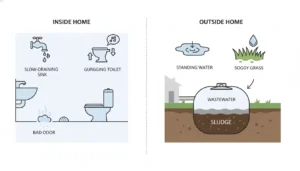
Knowing the signs your septic tank needs pumping can save you from messy backups and expensive repairs. Septic systems usually give warning signals before serious damage occurs. The key is recognizing these signs early and acting before the system fails.
If you’re unsure how often do septic tanks need to be pumped, these symptoms often mean your tank is already overdue.
Warning Signs Inside the Home
Some of the earliest warning signs show up inside your house. Slow drains in sinks, showers, or tubs often indicate that the tank is too full to process wastewater properly. You may also hear gurgling sounds coming from drains or toilets as air gets trapped in the plumbing.
Another common red flag is foul odors. If you notice sewage-like smells coming from drains or bathrooms, it usually means waste is backing up and gases are escaping. These indoor signs should never be ignored, as they often appear before more serious system problems develop.
Warning Signs Outside the Home
Problems can also appear outside your house. Soggy soil or unusually green grass near the septic tank or drainfield suggests wastewater isn’t draining correctly. In more severe cases, you may see standing water around the drainfield, especially during dry weather.
These outdoor signs often mean the tank is full and pushing untreated waste into the soil, which can contaminate groundwater and damage the drainfield.
Why Waiting Too Long Can Damage Your System
When sludge and scum reach about 30% of the tank’s capacity, solids can flow into the drainfield. This leads to clogs, soil saturation, and eventual drainfield failure. Waiting too long to pump turns a simple maintenance task into a major repair or full system replacement.
How to Create a Septic Tank Pumping Schedule That Works
Creating a reliable septic tank pumping schedule isn’t about guessing or copying your neighbor’s timeline. It’s about matching your system’s needs to how your household actually uses water. A well-planned schedule helps prevent backups, protects the drainfield, and avoids unnecessary service costs.
Instead of relying only on the calendar, homeowners should use system details and lifestyle changes to guide pumping decisions.
Start With Tank Size and Occupant Count
The best place to start is with your tank size and the number of people living in your home. Pumping charts can provide helpful reference points by showing estimated intervals based on tank capacity and household size.
For example, a four-person household with a 1,000-gallon tank may need pumping every two to three years, while the same household with a larger tank could wait longer. These charts aren’t exact, but they offer a smart baseline for planning inspections and service calls.
Adjust for Lifestyle Changes
Your septic needs change as your lifestyle changes. A growing family, frequent guests, or working from home can increase daily water usage. More laundry, longer showers, and heavier kitchen use all shorten the time between pump-outs.
Whenever water usage increases, it’s wise to revisit your pumping schedule and adjust sooner rather than later.
Why Over-Pumping Can Be a Mistake
While waiting too long is risky, pumping too often can also cause problems. Over-pumping may disrupt beneficial bacteria that help break down waste, reducing system efficiency. It also leads to unnecessary costs without added protection.
A balanced schedule keeps your system healthy and your maintenance budget under control.
Professional Inspections vs Guesswork
Relying on guesswork to decide when to pump your septic tank can lead to serious problems. This is where septic tank inspection and pumping by a professional becomes essential. Inspections remove uncertainty and help homeowners make decisions based on real system conditions, not assumptions.
Septic professionals use specialized tools to measure sludge and scum layers inside the tank. These measurements show exactly how full the tank is and whether solids are approaching the danger zone. When sludge and scum take up too much space, pumping is needed to prevent waste from reaching the drainfield.
So, when should you call a local septic professional? Schedule an inspection if it’s been several years since your last pump-out, if you notice slow drains or odors, or if your household size or water usage has changed. Regular inspections help determine for your specific system, protecting both your home and your wallet.
Conclusion – How Often Do Septic Tanks Need to Be Pumped?
So, how often do septic tanks need to be pumped? For most homes, the general guideline is every 3 to 5 years, but that timeline should never be treated as a fixed rule. Household size, tank capacity, water usage, and waste habits all play a role in how quickly a tank fills.
The smartest approach is combining this baseline with regular inspections and adjustments based on real usage. Paying attention to warning signs and scheduling professional inspections helps prevent costly system failures. With a customized pumping schedule and proactive care, you can extend the life of your septic system, avoid emergencies, and protect your home for years to come.
FAQs About Septic Tank Pumping
Below are clear answers to the most common questions homeowners ask about septic tank pumping. Each response is short, practical, and easy to understand.
Can I pump my septic tank too often?
Yes, pumping too often can be unnecessary. While it won’t damage the tank, frequent pumping can disrupt beneficial bacteria that help break down waste. It also increases maintenance costs without added benefits. A balanced schedule based on inspections is more effective than pumping on guesswork alone.
What happens if I never pump my septic tank?
If a septic tank is never pumped, solid waste builds up and eventually overflows into the drainfield. This can cause sewage backups, foul odors, groundwater contamination, and drainfield failure. Repairs can be extremely expensive, often costing far more than regular pumping.
Does location or soil type affect pumping frequency?
Yes, soil type and location can influence how a septic system performs. Poor drainage, heavy clay soil, or high groundwater levels may require closer monitoring and more frequent pumping. Local conditions can affect how efficiently wastewater moves through the system.
Is pumping the same as cleaning a septic tank?
Pumping removes sludge and scum from the tank, but it does not fully clean it. Cleaning may involve rinsing or inspecting internal components. Pumping is routine maintenance, while cleaning is usually done during inspections or repairs.
Read Also: Difference Between College Ruled and Wide Ruled Paper